
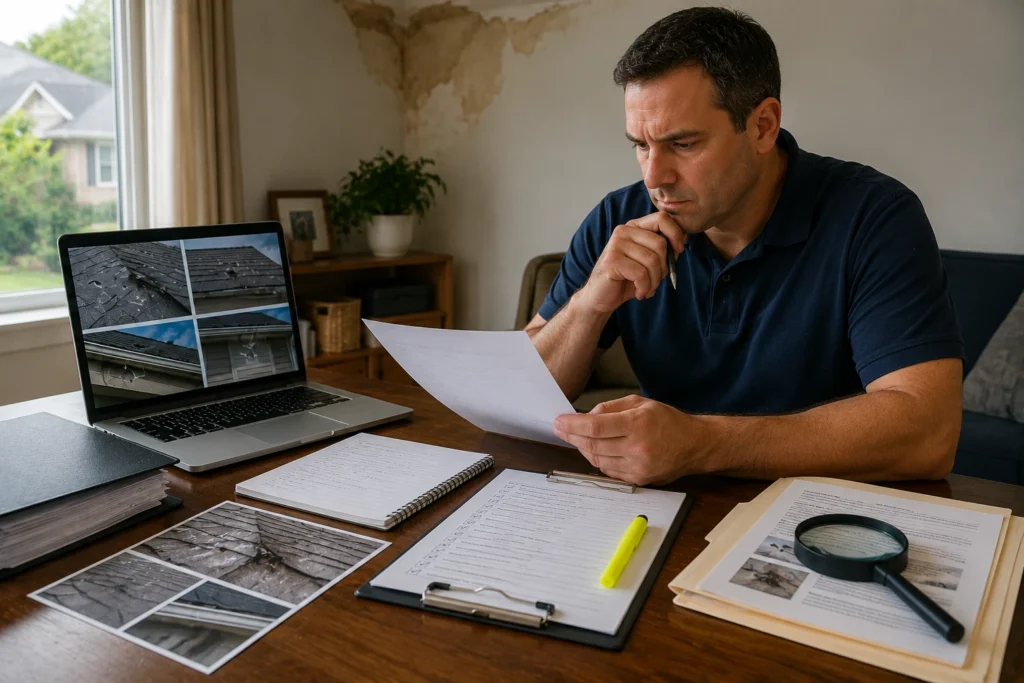
A denied roof claim can feel like a punch to the gut. One storm rolls through the neighborhood, shingles get battered, gutters dent, water stains begin spreading across ceilings, and then the insurance company sends a letter saying the damage is not covered. Suddenly, homeowners searching for answers about What to Do If Your Hail Claim Was Denied in Texas find themselves frustrated, confused, and financially exposed all at once. I have seen this happen repeatedly across Texas. A homeowner assumes the insurance company will inspect the roof fairly, issue payment quickly, and help restore the property. Instead, the carrier may argue the roof damage came from age, improper installation, or normal wear. Sometimes they approve only a tiny portion of the claim while ignoring major roofing components entirely. Other times, they deny the loss outright.
That does not automatically mean the insurance company is correct. Texas hail claims are complicated. Roofing systems are complicated. And many denials can be challenged successfully when homeowners understand the process, gather the right evidence, and respond strategically instead of emotionally. If you are trying to figure out What to Do If Your Hail Claim Was Denied in Texas, this guide walks through the practical next steps that can protect your property, your finances, and your leverage during the dispute process.
Why Hail Claims Get Denied So Often in Texas
Texas sees some of the most aggressive hailstorms in the country. That means insurance carriers process massive claim volumes after major weather events. Large volume creates speed. Speed creates mistakes. Not every denial is malicious. Some are simply the result of rushed inspections or incomplete evaluations. Others are more aggressive attempts to reduce claim payouts.
Here are some of the most common denial reasons homeowners encounter:
| Denial Reason | What It Usually Means |
| Wear and tear | Carrier argues the roof was already deteriorating |
| Cosmetic damage | Insurer claims dents do not affect function |
| Late reporting | Company says the delay weakened causation evidence |
| Installation defects | Roof blamed on workmanship problems |
| No storm evidence | Carrier disputes whether hail hit the property |
| Maintenance issues | Insurer argues neglect contributed to damage |
The wording matters. A lot. A denial letter may sound definitive, but many conclusions are subjective. One adjuster may call a roof “aged.” Another may identify clear impact damage requiring full replacement. That is why homeowners should never stop investigating after the first inspection. Especially in high-storm regions like Rosenberg, claim disputes are extremely common.
Understand the Difference Between a Denial and an Underpayment
This is important because many homeowners misunderstand what actually happened to their claim. A full denial means the carrier rejected coverage entirely. An underpayment means they acknowledged some damage but drastically reduced the repair scope or pricing. Functionally, both situations create financial problems for homeowners.
For example:
- The insurer approves only a few shingles
- Gutters are excluded
- Flashing is omitted
- Underlayment is ignored
- Code upgrades are left out
- Labor pricing is undervalued
The result? The homeowner still cannot complete repairs properly.
When people search for What to Do If Your Hail Claim Was Denied in Texas, they often include underpaid claims in that frustration because the outcome feels nearly identical. The roof still does not get fixed correctly.
Read the Denial Letter Carefully
Most homeowners skim the denial letter once and immediately become angry. I understand why. But slow down.
The denial letter is actually one of the most important documents in the entire dispute.
It tells you exactly where the insurance company is positioning its defense.
Pay close attention to:
- Specific policy exclusions
- Dates mentioned
- Adjuster conclusions
- Engineering references
- Coverage limitations
- Cosmetic endorsements
- Deductible language
You are looking for weaknesses.
Sometimes the letter sounds vague. Sometimes the carrier cites “wear and tear” without detailed support. Sometimes there are no photographs attached. Sometimes the insurer references an engineering opinion that was never provided to the homeowner.
Those gaps matter.
Create a dedicated claim folder immediately. Save:
- Emails
- Inspection reports
- Photos
- Letters
- Estimates
- Voicemails
- Weather reports
- Contractor notes
Organization becomes power during a dispute.
Confirm That Hail Actually Hit Your Area
This sounds obvious, but proving storm activity matters more than many homeowners realize. Insurance carriers sometimes argue there was insufficient hail activity near the property. That means you need independent verification.
Useful sources include:
- NOAA storm reports
- Hail tracking services
- Local weather archives
- Roofing supplier storm maps
- Radar history databases
Storm verification strengthens causation. It helps connect the property damage directly to the weather event. If your roof shows fresh impacts and storm records confirm large hail in the area on the same date, your position becomes significantly stronger. This is especially important when dealing with older roofs. Insurance companies often attempt to blur the line between storm damage and age-related deterioration.
Get a Second Roof Inspection
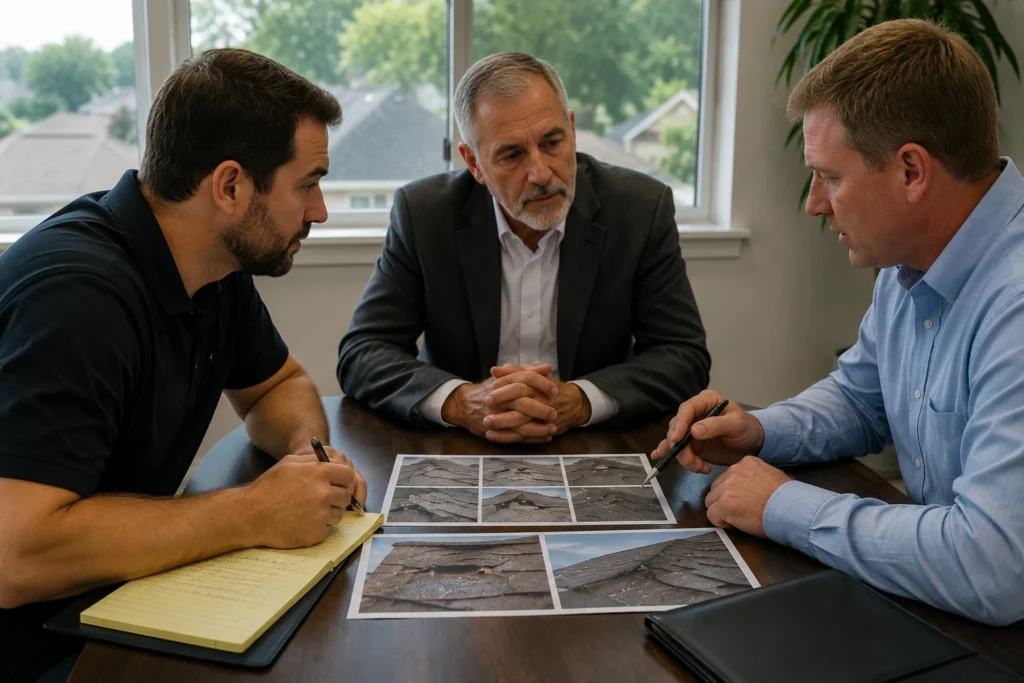
Never rely on a single inspection if the claim was denied. Seriously. Never. Carrier inspections are often short. Some adjusters spend less than twenty minutes evaluating an entire roofing system. Others fail to inspect collateral indicators like soft metals, screens, or vents.
A strong independent inspection should include:
- Roof slope analysis
- Test square documentation
- Detailed photographs
- Soft metal impact evidence
- Gutter evaluation
- Vent inspection
- Window screen review
- Interior moisture signs
- Underlayment concerns
- Flashing conditions
Good inspections are methodical. They tell a story. The goal is not to create exaggerated damage. The goal is accurate documentation. And accuracy matters enormously in disputes involving What to Do If Your Hail Claim Was Denied in Texas because insurers frequently rely on incomplete inspection conclusions.
Document Everything Like a Professional
Insurance companies pay based on evidence. That is the reality. Emotion does not win claims. Documentation does. One of the smartest things homeowners can do early in the process is learn How to Document Hail Damage for an Insurance Claim properly, because detailed photos, inspection notes, and weather verification often become the foundation of a successful dispute.
Here is the type of evidence homeowners should gather:
Exterior Documentation
- Roof impacts
- Dented gutters
- Damaged vents
- Fence staining
- HVAC fin damage
- Broken skylights
- Downspout impacts
Interior Documentation
- Ceiling stains
- Moisture intrusion
- Drywall bubbling
- Attic leaks
- Mold indicators
Supporting Documentation
- Weather reports
- Contractor estimates
- Inspection summaries
- Repair invoices
- Prior roof maintenance records
Take wide photos first. Then medium-range photos. Then close-up detail shots. That progression helps establish context and credibility. Video walkthroughs also help. A narrated inspection showing property conditions can become powerful supplemental evidence later.
Understand the Insurance Policy Language
This part is not exciting. But it is critical. Many homeowners lose leverage because they never actually read their policy. You do not need to become a lawyer. You just need to understand the major terms affecting your claim.
Actual Cash Value (ACV)
This is the depreciated value of damaged materials.
Replacement Cost Value (RCV)
This reflects the amount needed to replace damaged property with comparable materials.
Recoverable Depreciation
The withheld amount released after repairs are completed.
Cosmetic Damage Exclusions
Some policies limit payment for damage considered aesthetic rather than functional.
Matching Limitations
These clauses may affect whether adjoining roofing materials must match visually.
Small wording differences can dramatically affect claim outcomes. When evaluating What to Do If Your Hail Claim Was Denied in Texas, policy interpretation becomes one of the biggest factors in determining whether the denial was legitimate or challengeable.
Request a Reinspection
A reinspection is often the next logical step after obtaining stronger evidence. Do not simply call the insurance company and say, “I disagree.” Be specific.
Explain:
- What was missed
- What evidence contradicts the denial
- What additional documentation now exists
- Why another inspection is warranted
Preparation matters.
Before the reinspection:
- Organize all photographs
- Print weather reports
- Prepare contractor findings
- Mark disputed roof areas
- Have your roofing professional present
That last point is huge.
Roofing professionals and public adjusters can help identify overlooked damage in real time while the carrier representative is onsite. Reinspections frequently change claim outcomes because additional evidence forces a deeper review.
Why Public Adjusters Become Important in Denied Claims
At some point, homeowners realize they are operating at a disadvantage. Insurance carriers handle claims daily. Most homeowners handle them once every decade, if that. That imbalance matters. Public adjusters represent policyholders, not insurance companies.
Their role often includes:
- Reviewing policy language
- Building damage documentation
- Preparing estimates
- Negotiating claim scope
- Managing supplemental disputes
- Challenging incomplete inspections
They understand how carriers structure claim files and where denials often fall apart.
This becomes especially useful when dealing with:
- Large roof losses
- Commercial properties
- Complex storm damage
- Repeated denials
- Major underpayments
In Rosenberg, severe weather events can create widespread claim volume, which sometimes increases rushed inspections and inconsistent outcomes.
The Supplement Process Explained
Supplements are one of the least understood parts of property insurance claims. A supplement is not fraud. It is not “asking for extra money.” It is a formal request to address missed or newly identified damage. And missed items are extremely common.
Typical supplement items include:
- Flashing
- Drip edge
- Starter shingles
- Ridge caps
- Ice and water shield
- Ventilation components
- Code upgrades
- Interior repairs
- Detach and reset operations
Initial insurance estimates are often incomplete because adjusters cannot always identify every issue during the first inspection. Roofing systems are interconnected. Replacing shingles alone may not restore the system properly. That is why supplements frequently increase total claim value significantly.
Common Mistakes Homeowners Make After a Denial

Some mistakes weaken claims badly. Others destroy leverage entirely. Avoid these.
Waiting Too Long
Delays make causation harder to prove. Weather exposure continues damaging the roof over time.
Throwing Away Damaged Materials
Preserve evidence whenever possible.
Accepting Verbal Statements
Always request written explanations.
Hiring Cheap Contractors
Poor inspections weaken disputes.
Posting Online About the Claim
Insurance carriers sometimes review public social media activity.
Failing to Read the Policy
Policy misunderstandings create costly assumptions.
The homeowners who achieve the best outcomes after denied claims are usually the most organized and proactive.
Texas Insurance Laws Matter
Texas has laws governing claim handling timelines and carrier responsibilities. Those rules matter because delays and unreasonable conduct can sometimes create additional pressure on insurers.
Important areas include:
- Investigation deadlines
- Payment timelines
- Communication requirements
- Prompt payment obligations
Carriers are expected to investigate claims reasonably and respond within required periods. That does not mean every denial violates the law. But repeated delays, ignored evidence, or unsupported conclusions can raise serious concerns. This is another reason why detailed documentation matters so much.
You want a clear timeline showing:
- When the claim was filed
- When inspections occurred
- What evidence was submitted
- How the insurer responded
- What explanations were provided
Strong records protect homeowners.
When Appraisal May Help
Appraisal is a dispute resolution process written into many Texas property policies. It is commonly misunderstood. Appraisal generally addresses disputes involving the amount of loss, not whether coverage exists at all.
Here is the basic structure:
| Party | Role |
| Policyholder appraiser | Represents homeowner valuation |
| Carrier appraiser | Represents insurer valuation |
| Umpire | Resolves disagreements |
Appraisal can sometimes resolve disputes faster than litigation. But it is not always appropriate.
Situations where appraisal may help:
- Scope disagreements
- Pricing disputes
- Underpayment conflicts
- Competing repair estimates
Situations where appraisal may not help:
- Pure coverage denials
- Fraud allegations
- Complex legal disputes
This is why claim strategy matters. Choosing the wrong dispute method can waste time and money.
When an Attorney May Be Necessary
Not every denied hail claim requires legal action. Some do. If the insurer repeatedly ignores evidence, delays investigations excessively, or continues issuing unsupported denials, legal review may become appropriate.
Attorneys often evaluate:
- Policy compliance
- Claim timelines
- Inspection quality
- Communication records
- Potential bad faith handling
Lawsuits are serious. They take time. But sometimes they become necessary when all other dispute options fail. The important thing is not waiting too long before seeking guidance.
Why Hail Claims Become So Contentious
Roof claims involve enormous financial exposure for insurance carriers. Full roof replacements are expensive. Storm seasons create massive payout volume. That naturally creates pressure to control claim costs.
This is one reason homeowners searching for What to Do If Your Hail Claim Was Denied in Texas encounter so many disputes involving:
- Partial approvals
- Cosmetic damage arguments
- Repair-versus-replace battles
- Matching disputes
- Wear-and-tear allegations
The roofing industry itself also creates complexity. Contractor quality varies widely. Inspection standards differ. Some roofs genuinely show mixed conditions involving both storm damage and aging.
That is why detailed evidence matters more than opinions.
How to Strengthen Your Position Immediately
If your claim has already been denied, here are practical next steps homeowners should prioritize right away:
| Action | Why It Matters |
| Get independent inspection | Identifies overlooked damage |
| Gather storm reports | Supports causation |
| Organize evidence | Builds credibility |
| Read policy carefully | Clarifies coverage |
| Request written explanations | Creates accountability |
| Preserve damaged materials | Protects evidence |
| Consider professional help | Improves negotiation leverage |
Small actions compound quickly during disputes.
Why Local Knowledge Matters
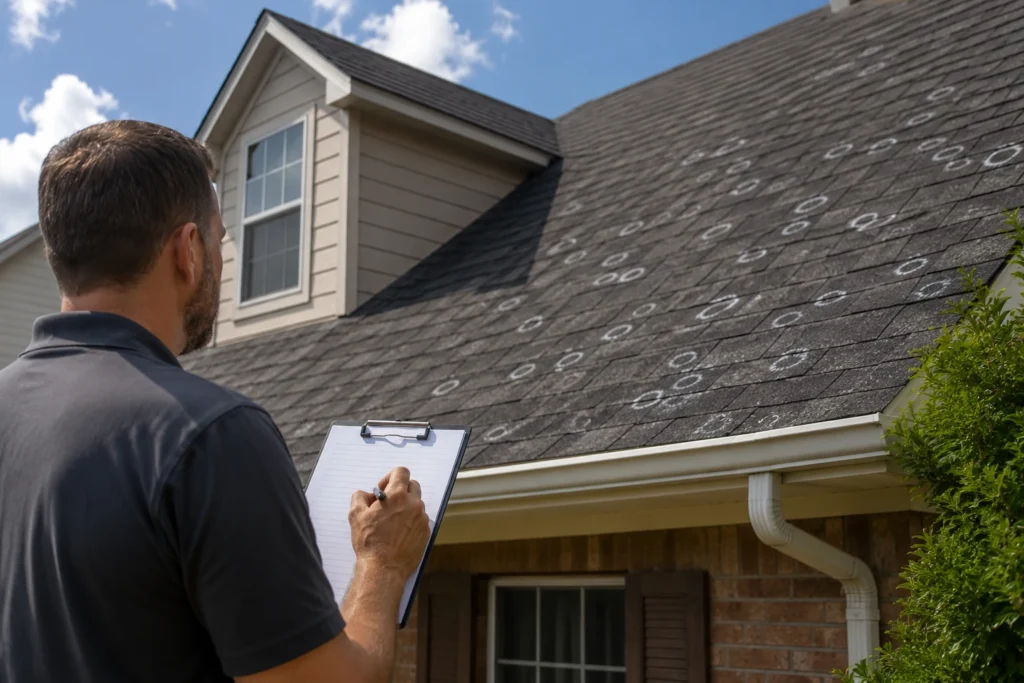
Texas roofing systems face unique environmental stress. Heat. UV exposure. Wind. Hail. Humidity. Rapid thermal expansion. All of it affects how roofs age and fail. Local experience matters because storm patterns, construction styles, and insurance dispute trends vary across regions.
A roofing professional familiar with Rosenberg conditions may identify issues that out-of-area inspectors overlook entirely. That local understanding becomes especially valuable after widespread hailstorms when carriers deploy large numbers of catastrophe adjusters unfamiliar with regional roofing characteristics.
The Emotional Side of Claim Disputes
Claim disputes are rarely quick. That surprises people. Homeowners often expect resolution within a few weeks. Instead, complex disputes may stretch across months depending on inspections, supplements, engineering reviews, and negotiations. The emotional toll builds slowly. At first, there is confusion. Then frustration. Then exhaustion. I have seen homeowners reach the point where they simply want the process to end, even if that means accepting less money than the repairs truly require. Insurance carriers understand this pressure dynamic. The longer disputes continue, the more financially and emotionally drained homeowners become.
That is why organization matters so much. A structured claim file creates confidence. Clear evidence reduces uncertainty. Professional guidance helps homeowners avoid feeling isolated during negotiations. In many ways, a complicated insurance dispute behaves like a form of game theory, where each side evaluates risk, leverage, timing, and evidence before deciding how aggressively to negotiate the claim.
Most importantly, homeowners should remember this: A denial is still a negotiation position. It is not always the final outcome. Many disputed claims eventually reverse course after stronger evidence, supplemental documentation, reinspection findings, or professional representation enters the process. That persistence can make an enormous financial difference for Texas property owners facing major hail losses.
Final Thoughts
A denial is not necessarily the end of the road. Many homeowners searching for What to Do If Your Hail Claim Was Denied in Texas eventually discover their original inspection was incomplete, their documentation was insufficient, or their policy allowed more coverage than they initially believed. The key is responding intelligently instead of emotionally. Read the denial carefully. Gather evidence aggressively. Verify storm activity. Request stronger inspections. Understand the policy language. Document everything. And when necessary, bring in experienced professionals who understand how Texas hail disputes actually work.
Insurance companies evaluate claims based on proof. The stronger the proof, the harder it becomes to justify weak denials or incomplete payouts. For homeowners dealing with storm damage in Rosenberg and across Texas, persistence often matters just as much as the initial inspection itself. And sometimes, the difference between a denied claim and a properly resolved one comes down to one thing: refusing to stop after the first “no.”
FAQs
Insurance companies may deny claims due to wear and tear allegations, late reporting, insufficient evidence, or policy exclusions.
Yes. Homeowners can request reinspections, submit supplemental evidence, hire public adjusters, or pursue appraisal and legal review.
Timelines vary by policy and legal circumstances, so homeowners should act quickly after receiving the denial letter.
Absolutely. Independent inspections often uncover damage or claim details missed during the original carrier inspection.
Photos, weather reports, contractor estimates, inspection notes, and interior leak documentation all help support the claim.
A supplement is a request for additional payment based on missed damage, code upgrades, or incomplete repair scope.
Yes. Hail impacts may weaken roofing materials long before interior leaks become visible.
A public adjuster may help when claims are denied, underpaid, delayed, or involve large or complex roof losses.
It usually means the insurer believes the damage affects appearance but not roof functionality or performance.
Yes. Texas has claim handling and prompt payment laws that require insurers to investigate and respond within certain timelines.