
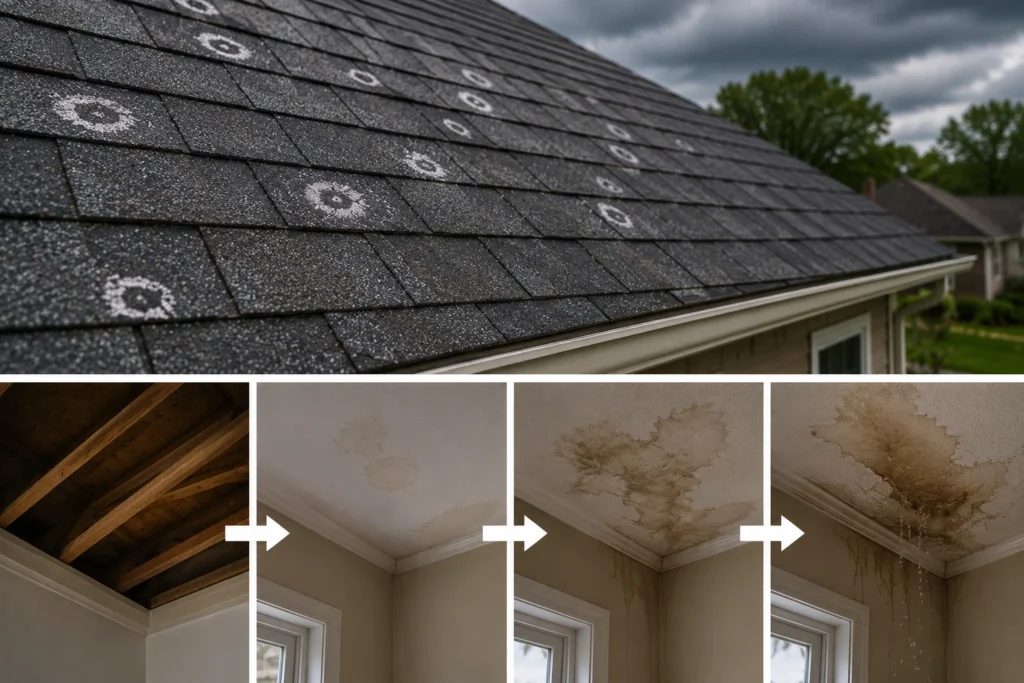
Hailstorms move fast. One minute the sky is calm, and the next your roof is taking a beating from ice chunks traveling at brutal speeds. Then comes the stressful part the insurance process. That is exactly why understanding How to Document Hail Damage for an Insurance Claim matters so much before you hire contractors, sign agreements, or file paperwork blindly. Good documentation changes everything.
It can mean the difference between a smooth payout and a frustrating denial. Between a full roof replacement and a tiny settlement that barely covers repairs. Insurance carriers rely heavily on evidence, timelines, and proof of storm-related damage. If homeowners fail to gather that information properly, claims often become uphill battles. I have seen homeowners take a few blurry photos and assume that is enough. It usually is not. Insurance adjusters evaluate details. They look at impact patterns, collateral damage, weather history, roof condition, and repair timelines. The more organized and detailed your evidence is, the stronger your position becomes.
In storm-prone areas like Rosenberg, homeowners often face sudden hail events that damage roofs, gutters, vents, and siding all at once. Fast action after the storm can preserve valuable evidence before wind, rain, or temporary repairs erase the proof. This guide breaks down exactly how to document hail damage correctly. Step by step. No fluff. No confusing technical language. Just practical strategies that help protect your insurance claim from the beginning.
Why Proper Hail Damage Documentation Matters
Insurance companies do not pay claims based on emotion. They pay based on evidence. That sounds harsh, but it is true. A homeowner may know the roof was damaged during the storm. The challenge is proving it clearly enough for the carrier to accept responsibility. Strong documentation builds that bridge.
Here is what solid evidence accomplishes:
| Documentation Type | Why It Matters |
| Roof photos | Shows direct impact damage |
| Weather reports | Confirms storm timing |
| Interior leak photos | Connects roof failure to water intrusion |
| Contractor inspection reports | Adds professional verification |
| Repair receipts | Supports reimbursement requests |
| Timeline logs | Prevents delay disputes |
Weak documentation creates gaps. Those gaps often become denial reasons.
Carriers may argue:
- The roof damage existed before the storm
- Damage resulted from age or wear
- Leaks were caused by maintenance issues
- The homeowner waited too long to report the claim
- There is insufficient storm evidence
That is why homeowners researching How to Document Hail Damage for an Insurance Claim before filing are usually in a much stronger position later. Preparation matters.
The First Steps to Take After a Hailstorm
The hours immediately after a hailstorm are critical. Evidence disappears quickly. Water dries. Temporary repairs cover impacts. Debris gets cleaned up. Contractors start knocking on doors. Slow down. Before anything else, focus on safety.
Prioritize Safety First
Never rush onto a damaged roof during or immediately after a storm.
Watch for:
- Wet or slippery surfaces
- Loose shingles
- Exposed electrical components
- Broken tree limbs
- Structural instability
If conditions are unsafe, document what you can from the ground first.
Record the Storm Details Immediately
Start building your storm timeline right away.
Write down:
- Date of the storm
- Approximate time
- Duration
- Hail size estimates
- Wind conditions
- Nearby property damage
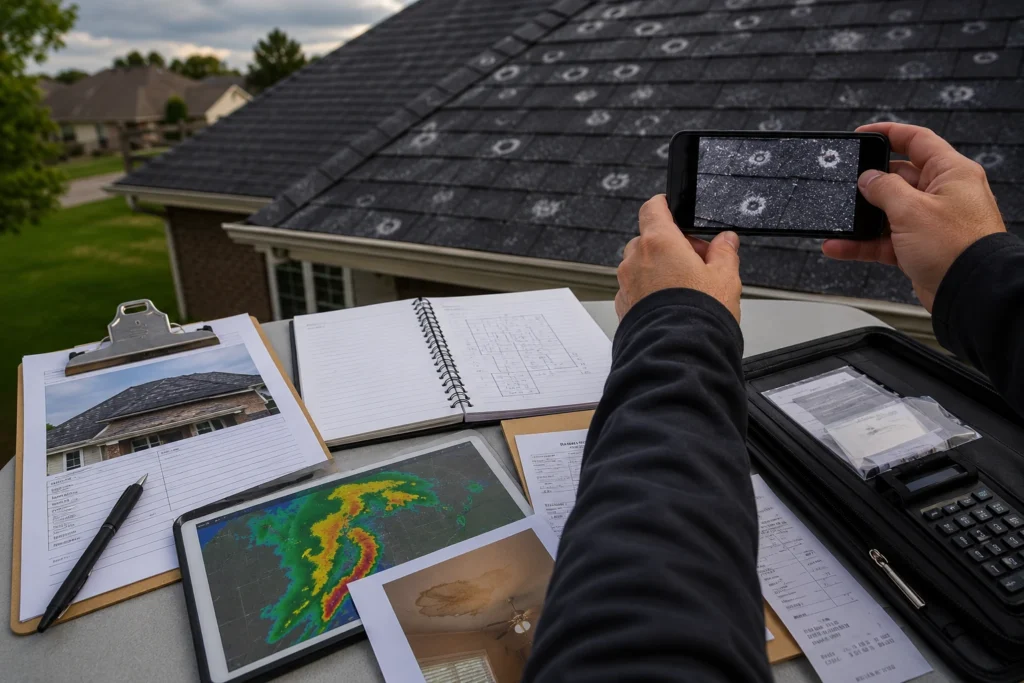
Save weather alerts from your phone. Screenshot radar images if possible. These details help establish causation later.
Prevent Additional Damage
Insurance policies generally require homeowners to mitigate further loss.
That means:
- Tarp exposed areas
- Stop active leaks
- Remove standing water
- Protect furniture and electronics
Keep every receipt related to emergency work. Even small purchases matter.
Tools You Need to Properly Document Hail Damage
You do not need expensive equipment to build a strong hail claim file. Most homeowners already have the basics.
Smartphone or Digital Camera
Modern smartphones work surprisingly well. Use the highest resolution settings available. Enable timestamps if possible. Avoid blurry images or zooming excessively. Take more photos than you think you need. Seriously. You will not regret it later.
Flashlight
Dark attic spaces and shaded roof areas hide damage easily. A flashlight helps reveal:
- Moisture staining
- Cracks
- Soft spots
- Punctures
- Mold growth
Measuring Tape or Coin for Scale
Scale references matter. Place a coin or tape measure near hail impacts when photographing dents or fractures. This helps demonstrate severity.
Notebook or Notes App
Document observations in real time.
Record:
- Locations of damage
- Leak progression
- Conversations with contractors
- Insurance communication
- Inspection dates
Small details become valuable later.
Drone Photography
Drone images can provide excellent roof overviews without climbing dangerous slopes.
They help capture:
- Entire roof elevations
- Impact patterns
- Ridge damage
- Detached materials
Professional drone inspections are becoming increasingly common during hail claims.
How to Photograph Roof Hail Damage Correctly
This is where many homeowners make mistakes. A few random photos are not enough. Insurance carriers want clear, organized visual evidence that tells a complete story.
Start With Wide-Angle Photos
Begin by documenting the full property.
Capture:
- Entire roof slopes
- Front elevation
- Rear elevation
- Garage roof
- Gutters
- Detached structures
Wide shots establish context.
Move to Mid-Range Images
Next, narrow your focus. Photograph damaged sections while still showing surrounding roof areas. These images help adjusters understand where impacts occurred.
Capture Detailed Close-Ups
This is where strong claims separate themselves from weak ones.
Look for:
- Circular bruising
- Granule loss
- Cracked shingles
- Exposed asphalt matting
- Soft impact spots
- Split seams
- Fractured tile edges
Take photos from multiple angles and lighting positions. Shadows often reveal dents better than direct sunlight.
Photograph Every Roof Component
Hail rarely damages only shingles.
Document:
- Roof vents
- Flashing
- Ridge caps
- Skylights
- Gutters
- Downspouts
- Chimney caps
- Drip edge
Collateral damage strengthens storm evidence considerably.
Signs of Hail Damage Homeowners Commonly Miss
Some hail damage is obvious. Other forms are subtle and easy to overlook. That hidden damage can still lead to leaks months later.
Metal Dents
Metal surfaces often show impacts clearly.
Check:
- Gutters
- Downspouts
- Window trim
- Garage doors
- HVAC condenser fins
These dents help verify storm severity.
Soft Shingle Bruising
Not all hail impacts crack shingles immediately. Sometimes the surface appears intact while the underlying mat becomes weakened. Over time, those spots deteriorate faster and begin leaking.
Tile Roof Fractures
Tile systems are especially tricky. Small fractures may spread later through temperature changes and moisture intrusion. Improper walking can also worsen damage during inspections.
Hidden Underlayment Damage
Even when shingles survive visually, the waterproof layers beneath may be compromised. This hidden damage often becomes the center of claim disputes later.
How to Document Interior Damage

Roof claims are not just about the roof. Interior damage matters too. Water intrusion often proves that exterior storm damage caused functional failure.
Photograph Ceiling Stains Immediately
Water marks can fade or change shape over time. Take photos as soon as stains appear. Continue documenting progression if the leak worsens.
Inspect the Attic
The attic often tells the real story.
Look for:
- Wet decking
- Damp insulation
- Mold growth
- Active dripping
- Rusted fasteners
- Light penetration
Use caution while walking attic spaces.
Document Flooring and Wall Damage
Leaks spread.
Photograph:
- Warped flooring
- Peeling paint
- Swollen trim
- Wet carpet
- Bubbling drywall
Keep damaged materials until the insurance inspection occurs whenever possible.
Organizing Your Hail Damage Evidence
Documentation becomes useless if it is scattered across phones, emails, and random folders. Organization matters. A lot.
Create Separate Claim Folders
Use categories like:
- Roof damage
- Interior damage
- Weather reports
- Emergency repairs
- Contractor inspections
- Insurance communication
Digital organization makes claims far easier to manage.
Label Photos Clearly
Instead of generic file names, use descriptive labels.
Examples:
- FrontSlope_HailDamage_May2026
- AtticLeak_NorthCorner
- GutterDent_GarageSide
Simple naming saves time later.
Save Every Receipt
Do not throw anything away.
Keep receipts for:
- Tarps
- Fans
- Water extraction
- Temporary labor
- Hotel stays if displacement occurred
These expenses may qualify for reimbursement.
Track Insurance Communication
Create a communication log.
Record:
- Dates
- Representative names
- Phone summaries
- Emails
- Claim numbers
This protects homeowners if disputes arise later. Homeowners handling a Hail Damage Roof Insurance Claim should also understand that strong evidence collection is often less about taking a few dramatic photos and more about building a complete, organized timeline of storm-related damage. In complex systems theory, this idea loosely mirrors Topological vector space, where structure and relationships matter just as much as individual elements. Insurance carriers often evaluate the overall consistency of a claim file in a very similar way every photo, receipt, weather report, and inspection note works together to support the larger damage narrative.
Using Weather Reports to Support Your Claim
Weather data can become one of the strongest parts of your claim file. Insurance carriers frequently verify storms independently. You should too.
Why Weather Verification Matters
Claims sometimes fail because carriers dispute whether damaging hail actually occurred near the property. Storm reports help eliminate that argument.
Useful Weather Sources
Reliable options include:
- National Weather Service
- NOAA storm archives
- Local meteorologists
- Hail tracking databases
Save screenshots and PDF reports whenever possible.
Match Damage Timing to Storm Dates
Timing matters. If the roof leak appeared right after a documented hailstorm, that strengthens your position significantly. Homeowners in Rosenberg often experience severe spring and summer storm systems that produce damaging hail alongside heavy winds. Local weather verification helps establish clear storm timelines tied directly to property damage.
Professional Inspections vs DIY Documentation
Homeowners should absolutely document damage themselves. But professional inspections still matter. The two approaches work best together.
What Homeowners Can Document Well
DIY documentation works well for:
- Initial storm evidence
- Visible impacts
- Interior leaks
- Timeline creation
- Emergency conditions
Early homeowner evidence can preserve details before contractors arrive.
What Professionals Often Identify
Experienced inspectors may detect:
- Lifted shingles
- Microfractures
- Soft bruising
- Ventilation damage
- Hidden flashing failures
- Underlayment compromise
Many of these issues are difficult for untrained homeowners to recognize.
Independent Documentation Matters
Relying only on the insurance adjuster’s inspection is risky. Why? Because adjusters work for the carrier. That does not automatically mean bad faith, but homeowners should still maintain their own independent evidence file. Strong independent documentation creates accountability.
Common Documentation Mistakes That Hurt Insurance Claims
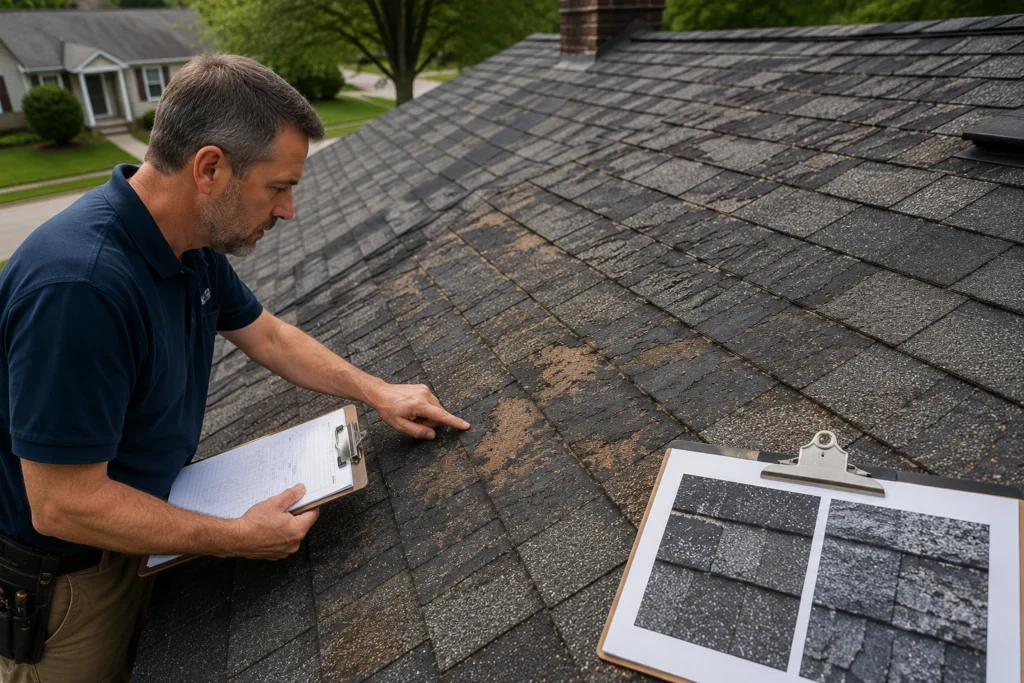
Some claim mistakes are incredibly common. Unfortunately, they can reduce payouts dramatically.
Taking Too Few Photos
Five photos will not tell the full story. Take dozens. Sometimes hundreds. Different angles matter. Different lighting matters. Different distances matter.
Failing to Photograph Undamaged Areas
This surprises many homeowners. Adjusters compare damaged and undamaged sections to evaluate storm patterns. Include comparison photos whenever possible.
Cleaning Up Too Quickly
Do not rush to erase evidence. Insurance carriers need to see the damage before major repairs begin. Temporary mitigation is fine. Permanent repairs should usually wait until inspections occur.
Delayed Reporting
Waiting months creates problems.
Carriers may argue:
- The damage worsened due to neglect
- Another storm caused the issues
- Normal aging occurred after the hail event
Prompt documentation strengthens causation.
Depending Entirely on Contractors
Contractors are important, but homeowners should still keep their own copies of everything. Photos disappear. Companies close. Phones get replaced. Maintain independent records.
How Public Adjusters Use Documentation to Strengthen Claims
This is where strong documentation becomes powerful leverage. Public adjusters rely heavily on evidence organization to support negotiations.
Building Comprehensive Claim Files
Detailed claim files often include:
- Roof diagrams
- Photo evidence
- Damage summaries
- Repair estimates
- Moisture readings
- Weather reports
- Material analysis
The more complete the file, the harder it becomes for carriers to minimize the loss.
Supporting Supplemental Claims
Insurance estimates frequently miss items.
Commonly overlooked costs include:
- Flashing replacement
- Underlayment
- Steep roof charges
- Ventilation components
- Code upgrades
- Disposal fees
Strong documentation helps justify supplements later.
Using Photos During Negotiations
Visual evidence changes conversations. It is harder to dismiss clear impact photos than vague descriptions. Organized photo files help public adjusters negotiate from a stronger position. This becomes especially important in disputed roof claims throughout Rosenberg where hail severity varies significantly by neighborhood and storm path.
What Happens After You Submit Documentation
Once the claim is filed, the insurance process begins moving quickly. Preparation matters here too.
The Insurance Inspection
The carrier typically schedules an adjuster inspection.
They may examine:
- Roof slopes
- Collateral damage
- Interior leaks
- Attic conditions
- Gutters
- Exterior elevations
Have your evidence organized beforehand.
Review the Insurance Estimate Carefully
Do not assume the first estimate is complete.
Compare it against:
- Contractor findings
- Your own photos
- Inspection reports
- Missing materials
Look closely at quantities and scope.
Request Reinspection if Necessary
Sometimes adjusters miss damage. That happens. If significant issues were overlooked, homeowners can request additional review or reinspection. Supporting documentation becomes critical during that process.
Understand the Appraisal Process
If claim disputes continue, appraisal may become an option depending on policy language. Documentation remains essential during appraisal because both sides rely heavily on evidence and scope analysis.
Hail Damage Documentation Checklist
Here is a practical checklist homeowners can follow immediately after a storm.
| Documentation Item | Completed |
| Storm date recorded | ✔ |
| Weather reports saved | ✔ |
| Wide-angle roof photos | ✔ |
| Close-up damage photos | ✔ |
| Gutter and metal dent photos | ✔ |
| Interior leak photos | ✔ |
| Attic inspection photos | ✔ |
| Temporary repair receipts saved | ✔ |
| Contractor inspection reports collected | ✔ |
| Insurance communication log created | ✔ |
| Video walkthrough completed | ✔ |
Simple checklists prevent overlooked details.
The Role of Video Documentation
Photos are powerful. Video can be even better. A short walkthrough video provides context that still images sometimes miss.
What to Include in Video Walkthroughs
Record:
- Roof overview from ground level
- Interior leaks
- Active dripping
- Damaged gutters
- Hail accumulation
- Broken exterior components
Narrate while filming. State the date and describe what you are seeing.
Why Video Helps
Video captures:
- Scale
- Depth
- Real-time conditions
- Water movement
- Multiple damage areas continuously
Insurance carriers often review video evidence during larger disputes.
Why Timing Is Everything in Hail Claims
The strongest hail claims are usually documented early. Not six months later. Not after multiple repair attempts. Not after another storm rolls through. Immediately.
Fast action preserves evidence before:
- Wind removes loose shingles
- Rain washes away granule marks
- Contractors disturb impacts
- Temporary repairs cover damage
- Sun exposure changes roof appearance
This is one of the biggest reasons homeowners researching How to Document Hail Damage for an Insurance Claim before hiring contractors often achieve smoother outcomes. Preparation creates leverage.
Advanced Strategies for Strengthening a Hail Damage Claim
Many homeowners stop documenting once the insurance adjuster finishes the first inspection. That is a mistake. The claim process does not truly end until repairs are completed and all damage has been addressed properly. Additional issues often appear later, especially after roofing materials are removed. Supplemental damage is extremely common in hail claims. That is why ongoing documentation matters.
Continue Photographing the Property During Repairs
Do not put the camera away once work begins.
Take photos during every major repair phase:
- Shingle removal
- Decking exposure
- Underlayment replacement
- Flashing removal
- Vent replacement
- Structural discoveries
Sometimes contractors uncover hidden moisture damage or rotted decking beneath the shingles. Those discoveries may support supplemental claim requests. Without photos, proving those conditions later becomes harder.
Request Detailed Contractor Notes
Not all contractor reports are equal.
Strong inspection documentation should include:
- Roof measurements
- Damage counts
- Material types
- Slope identification
- Ventilation observations
- Code-related concerns
- Moisture findings
Short handwritten notes rarely provide enough detail during claim disputes. Ask for organized digital reports whenever possible.
Keep Samples of Damaged Materials
This step gets overlooked constantly. If shingles, flashing, or broken tiles are removed, keep samples when practical. Physical evidence can become important if disputes arise over material condition or impact severity. Store them safely and label them clearly.
For example:
- Front slope shingle sample
- Ridge cap fracture sample
- Garage flashing dent sample
Simple labeling prevents confusion later.
Understanding Functional Damage vs Cosmetic Damage
Insurance carriers often separate hail damage into two categories:
- Functional damage
- Cosmetic damage
Understanding the difference matters enormously.
Functional Damage
Functional damage affects the roof’s ability to protect the home from water intrusion and weather exposure.
Examples include:
- Cracked shingles
- Punctured membranes
- Broken tile sections
- Torn flashing
- Compromised underlayment
- Lifted seams
Functional damage is more likely to qualify for coverage because it directly impacts roof performance.
Cosmetic Damage
Cosmetic damage changes appearance without immediately affecting functionality.
Examples may include:
- Minor metal dents
- Surface blemishes
- Slight granule displacement
- Light finish marks
Some policies limit or exclude cosmetic coverage entirely. That is why documentation must focus on proving functional impact whenever possible. This becomes especially important during inspections in Rosenberg, where intense heat and humidity can accelerate deterioration after hail impacts weaken roofing materials.
Why Roof Age Still Matters in Hail Claims
Homeowners sometimes assume storm damage automatically guarantees full replacement coverage. Unfortunately, insurance carriers also evaluate roof age and condition. An older roof may face additional scrutiny.
Pre-Existing Wear vs Storm Damage
Adjusters often examine whether conditions existed before the storm.
Common carrier arguments include:
- Thermal cracking
- Granule aging
- Foot traffic damage
- Installation defects
- Maintenance neglect
Good documentation helps separate fresh storm impacts from ordinary aging.
How to Counter Wear-and-Tear Arguments
Several strategies help strengthen causation arguments:
- Use dated pre-storm photos if available
- Gather maintenance records
- Obtain contractor opinions
- Document collateral damage
- Match impacts with weather reports
Strong timelines matter. If the roof showed no leaking before the storm and leaks appeared immediately afterward, that supports storm causation significantly.
The Importance of Consistency During the Claims Process
One overlooked detail can create unnecessary complications. Consistency matters throughout the entire claim.
Make Sure Your Documentation Matches
Your:
- Photos
- Timeline
- Contractor reports
- Insurance statements
- Repair invoices
…should all align accurately. Conflicting information can weaken credibility during disputes.
For example, problems may arise if:
- The claim date changes repeatedly
- Different contractors describe different damage causes
- Photos do not match reported areas
- Repair invoices conflict with inspection findings
Stay organized from day one.
Avoid Guessing During Conversations
If you are unsure about a detail, do not speculate. Guessing can accidentally create inconsistencies later.
Stick to observable facts:
- What you saw
- When you noticed it
- What changed after the storm
- What professionals documented
Clear communication protects the integrity of your claim file.
Why Some Hail Damage Does Not Leak Immediately
This confuses many homeowners. A roof can suffer legitimate hail damage without showing immediate interior leaks. That does not mean the damage is minor.
Delayed Failure Is Common
Hail impacts often weaken roofing systems gradually.
Over time, exposure to:
- Heat
- UV radiation
- Rain
- Wind expansion
- Thermal cycling
…causes damaged areas to deteriorate further. Weeks or months later, leaks begin appearing.
Insurance Disputes Often Start Here
Carriers sometimes argue delayed leaks were unrelated to the original storm. That is why early documentation matters so much. If homeowners photograph fresh hail impacts immediately after the storm, they create evidence long before water intrusion develops. That early evidence can become extremely valuable later.
Final Claim Preparation Tips Before Settlement
Before accepting any settlement offer, pause and review everything carefully. Seriously. Slow down here. Once repairs begin fully, leverage may decrease significantly.
Review the Scope Thoroughly
Compare the carrier estimate against:
- Contractor estimates
- Roof measurements
- Code requirements
- Material quantities
- Ventilation needs
- Flashing replacement
- Underlayment inclusion
Missing line items happen constantly.
Watch for Depreciation Issues
Some policies apply depreciation differently depending on coverage type.
Understand:
- Recoverable depreciation
- Actual cash value
- Replacement cost provisions
- Deductible calculations
Documentation and invoices often become necessary to recover withheld depreciation amounts.
Keep the Claim File Even After Repairs Finish
Do not delete your records once the project ends.
Keep copies of:
- Photos
- Videos
- Estimates
- Insurance letters
- Final invoices
- Warranty information
Future buyers, inspectors, or additional claims may require those records later. A well-organized claim file remains valuable long after the storm is gone.
Final Thoughts
Hail claims are not just about damaged roofs. They are about evidence, organization, timing, and preparation. That is the reality. Homeowners who understand How to Document Hail Damage for an Insurance Claim put themselves in a far stronger position long before settlement negotiations begin. They preserve proof early. They stay organized. They create clear timelines. And they avoid many of the mistakes that weaken claims unnecessarily. The process does not have to be overwhelming.
Start simple:
- Take thorough photos
- Save receipts
- Record storm details
- Organize your files
- Document interior issues immediately
- Maintain independent records
Those small steps can dramatically improve claim outcomes later. For homeowners in Rosenberg, severe hailstorms can create complex roofing disputes very quickly. Strong documentation helps reduce uncertainty and gives property owners a clearer path forward when dealing with insurance carriers. Protect the evidence first. Everything else comes after that.
FAQs
You should document hail damage as soon as it is safe to do so. Early evidence helps prevent disputes about when the damage occurred.
Wide-angle roof photos, close-up impact shots, gutter dents, and interior leak photos are all important for supporting a claim.
Yes. Hail can weaken roofing materials long before leaks appear, especially on asphalt shingles and metal components.
A professional inspection can uncover hidden damage that homeowners may miss, making your documentation stronger and more complete.
Common mistakes include delayed reporting, poor photo quality, missing receipts, and repairing damage before documentation is complete.
Yes. Weather reports help verify storm timing, hail size, and severity, which can strengthen causation arguments.
They may argue the roof had pre-existing wear and tear, which is why strong documentation and timelines are important.
Take as many clear photos as possible from different angles and distances. More detailed documentation usually creates a stronger claim file.
Absolutely. Interior leaks and moisture intrusion often help prove that hail damage caused functional roof failure.
Yes. Receipts, inspection reports, and repair invoices can support reimbursement requests and supplemental claims later.