
A serious hailstorm can change everything in minutes. One moment your roof looks perfectly fine. The next, you are dealing with bruised shingles, dented flashing, hidden leaks, and the stress of starting a roof hail damage insurance claim Texas homeowners often find confusing and frustrating. That confusion is expensive. Many property owners assume visible damage is the only problem. It is not. Hail impacts can weaken roofing systems long before water stains appear inside the home. Worse, insurance estimates are not always complete. Important components get overlooked. Critical line items disappear. Some claims get underpaid simply because the damage was never properly documented in the first place.
I have seen homeowners wait too long, trust quick inspections, or accept incomplete payouts because they did not realize what their roof actually needed. That happens every storm season across Texas, including in Rosenberg, where severe weather can hit fast and leave long-lasting property damage behind. This guide breaks everything down clearly. No fluff. No recycled generic advice. Just practical information that helps homeowners understand hail roof damage insurance claims, protect their property, and avoid common mistakes during the claim process.
Understanding How Hail Damages Roofing Systems
Not all hail damage looks dramatic. In fact, some of the most expensive roof failures begin with subtle impacts that most homeowners never notice. That is what makes a roof hail damage insurance claim Texas process so challenging. A roof can appear “mostly okay” from the ground while suffering widespread functional damage underneath the surface. Tiny fractures. Granule displacement. Weakened seals. Small punctures. Those problems often grow worse under Texas heat.
Several factors determine how severe hail damage becomes:
| Factor | Why It Matters |
| Hail size | Larger hail creates deeper impacts |
| Wind speed | Wind-driven hail strikes harder |
| Roof age | Older materials crack more easily |
| Roof slope | Steeper roofs may shed impacts differently |
| Roofing material | Different systems absorb hail differently |
Texas roofs already endure extreme heat cycles throughout the year. Add hail into the equation and roofing materials can deteriorate rapidly after a storm. That is why quick inspections matter. Even moderate storms can create hidden vulnerabilities. A shingle that loses protective granules today may become tomorrow’s leak six months later. Homeowners often connect leaks to rainstorms long after the original hail event, never realizing the damage began earlier.
This delayed damage pattern creates another challenge during hail damage on roof insurance claim disputes. Insurance companies may question whether later problems truly relate to the original storm. Strong documentation early in the process helps eliminate that argument. Large insurance disputes sometimes resemble a form of Topology, where small structural changes can create major downstream effects across an entire system.
How to Identify Hail Damage by Roof Type
Different roofing materials react differently during hailstorms. A trained inspection should never treat asphalt, metal, and tile roofs the same way.
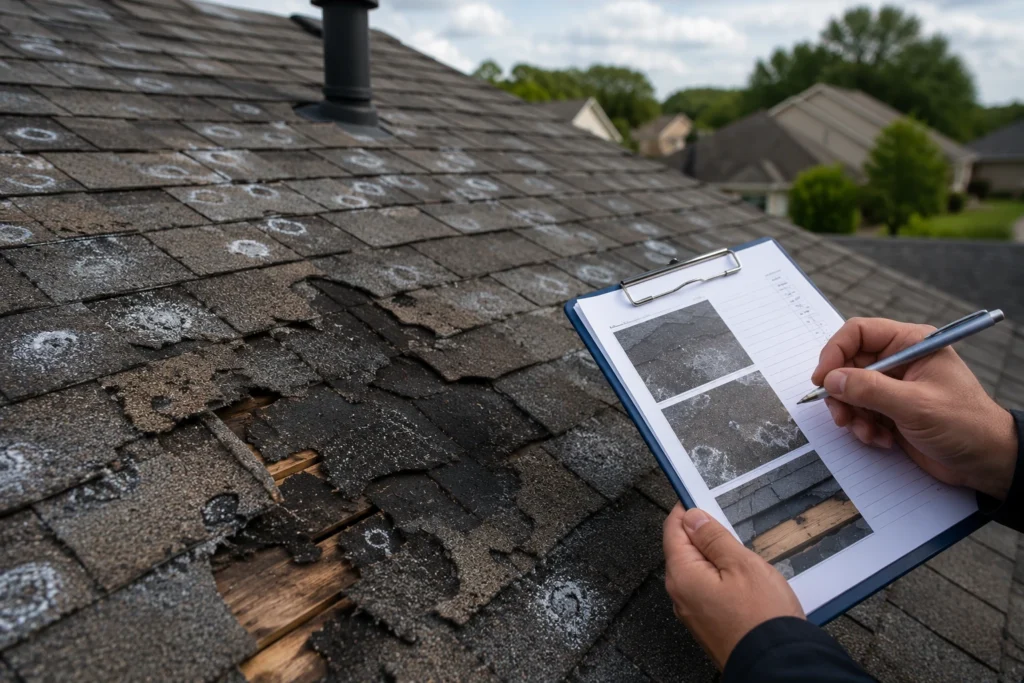
Asphalt Shingle Damage
Asphalt shingles are the most common residential roofing material in Texas. They are also highly vulnerable to hail impact damage.
Common signs include:
- Circular dark spots
- Granule loss
- Soft bruised areas
- Exposed fiberglass mat
- Cracked shingle tabs
- Loose seal strips
Granule loss matters more than many homeowners realize. Those granules protect shingles from ultraviolet exposure. Once stripped away, shingles begin aging much faster. A hail damage on roof insurance claim involving asphalt shingles often centers around whether the impacts created “functional damage” or only cosmetic changes. That distinction becomes critical during negotiations with carriers. Functional damage affects the roof’s ability to protect the structure. Cosmetic damage only changes appearance. Insurance companies sometimes rely heavily on that distinction to reduce payouts.
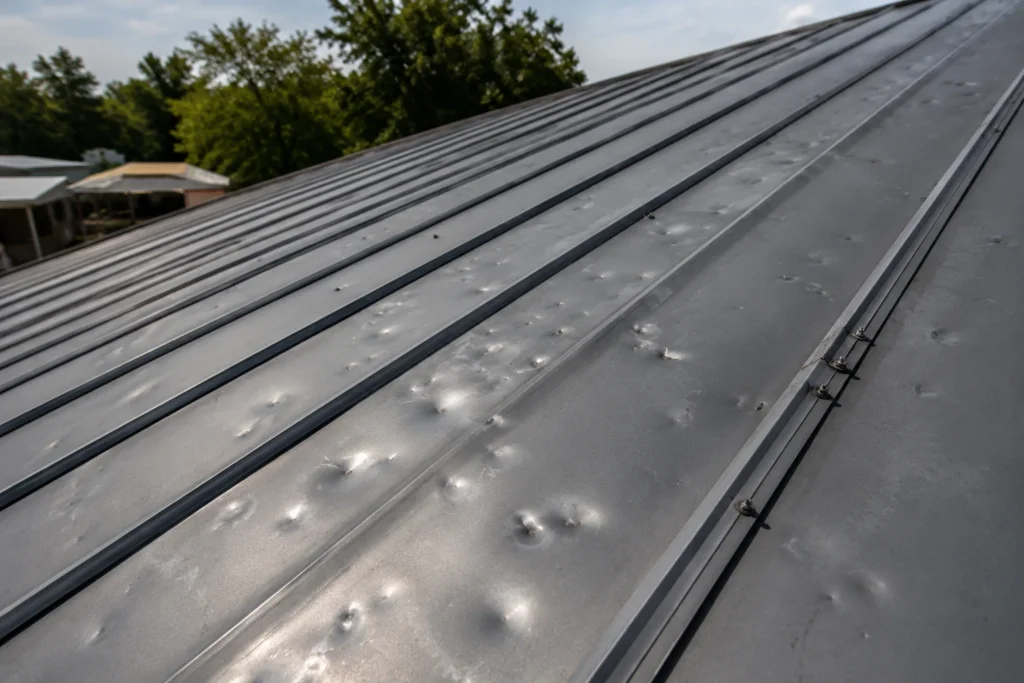
Metal Roof Damage
Metal roofs perform well during storms, but they are not invincible.
Watch for:
- Dents and dimples
- Coating fractures
- Fastener displacement
- Seam separation
- Functional punctures
Some dents are cosmetic. Others compromise drainage systems or panel integrity. The challenge is determining which impacts affect long-term performance. Insurance companies sometimes minimize metal roof claims because the roof may still appear structurally intact from a distance. A closer inspection often tells a different story. The location of the dents matters too. Impacts near seams, locks, or fasteners can affect water flow and panel stability over time.
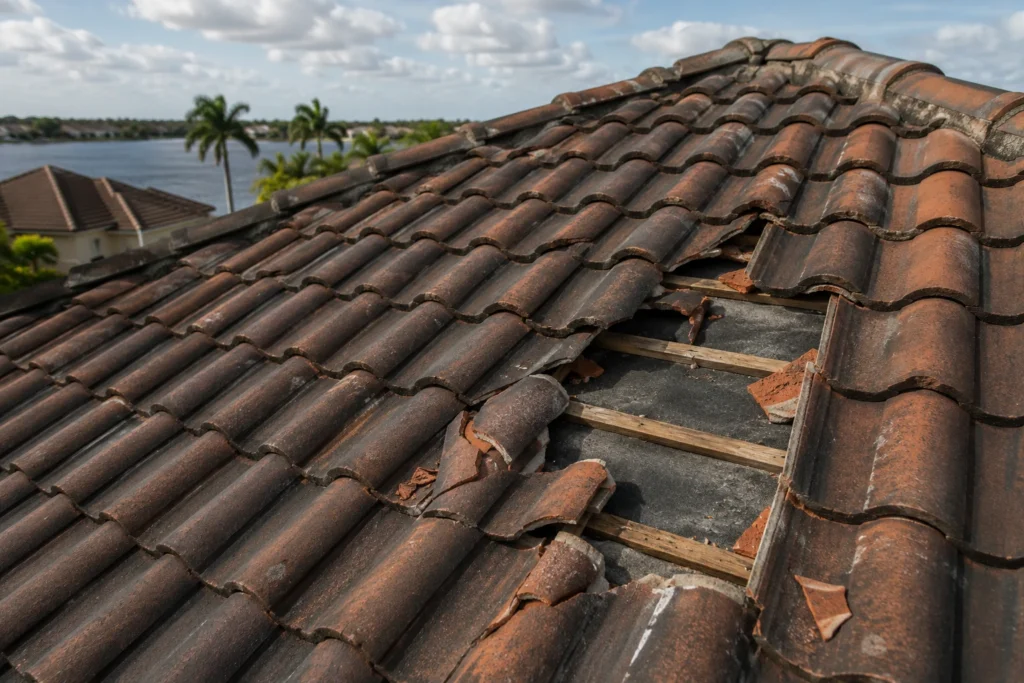
Tile Roof Damage
Tile roofs create unique claim challenges.
Damage may include:
- Hairline cracks
- Broken tile corners
- Dislodged sections
- Underlayment exposure
- Fragile aged tiles
Tile systems are particularly tricky because impacts are not always obvious immediately after the storm. Walking the roof incorrectly can even worsen the damage. That is one reason professional inspections are so important during a roof hail damage insurance claim Texas homeowners pursue after severe weather.
Damage Homeowners Frequently Miss
Some of the most important storm indicators are not the shingles themselves.
Professionals also inspect:
- Gutters
- Roof vents
- Window screens
- Flashing
- Downspouts
- Soft metal surfaces
- HVAC fins
Collateral damage patterns help confirm storm direction, hail size, and impact severity. Even interior spaces matter. Attic inspections sometimes reveal moisture intrusion before stains appear on ceilings.
Immediate Steps to Take After a Hailstorm
The first 24 to 72 hours after a storm matter more than most people realize. Fast action protects both your roof and your insurance claim.
Prioritize Safety First
Never rush onto a damaged roof immediately after a storm. Wet surfaces, loose materials, and hidden structural damage create serious hazards.
Instead:
- Inspect from the ground initially
- Look for fallen debris
- Check ceilings for leaks
- Photograph visible exterior damage
If water is entering the home, temporary mitigation becomes critical.
Document the Storm Quickly
Strong documentation strengthens hail roof damage insurance claims dramatically.
Start gathering evidence immediately:
- Photograph hailstones beside a measuring object
- Save weather alerts
- Record the storm date and time
- Photograph nearby property damage
- Capture dents on gutters, fences, and HVAC units
Collateral damage often helps confirm roof impacts. That matters because insurance carriers frequently compare roof damage against surrounding storm evidence.
Prevent Additional Damage
Insurance policies typically require homeowners to prevent worsening damage after a loss.
That may include:
- Emergency tarping
- Water extraction
- Temporary leak control
- Debris removal
Keep every receipt. Even temporary repairs can become reimbursable expenses during the claim process.
Notify Your Carrier Promptly
Waiting too long creates unnecessary complications. Some homeowners delay reporting because they fear premium increases or think the damage is minor. That hesitation can hurt the claim later.
Early reporting establishes:
- Timelines
- Storm causation
- Initial conditions
- Damage progression
The sooner the claim begins, the easier it becomes to connect the damage directly to the storm event.
How to Document Damage for Your Insurance Claim
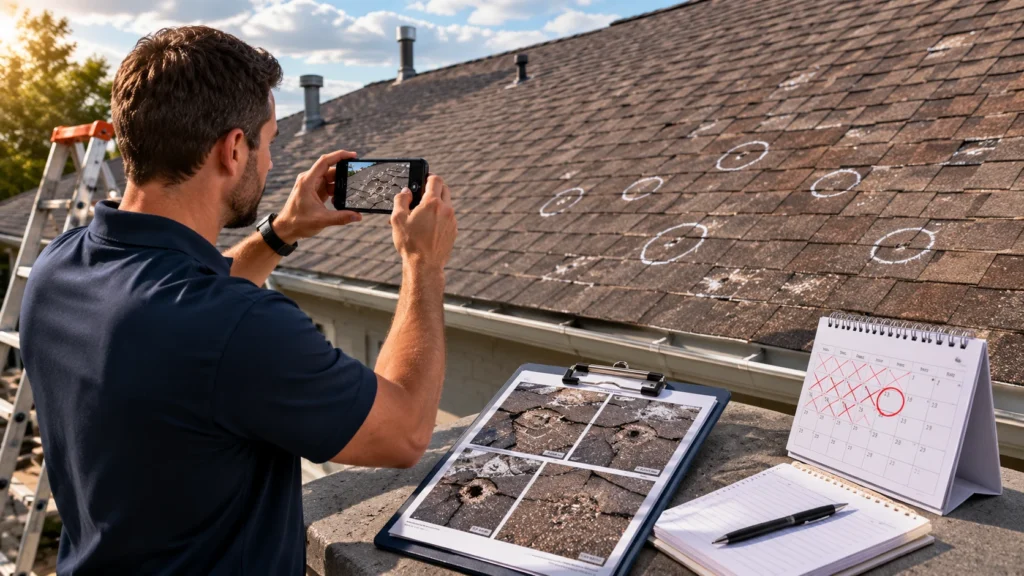
Documentation wins claims. Weak documentation loses them. Simple as that. A roof hail damage insurance claim Texas homeowners submit should always include organized evidence supporting both the storm event and the resulting property damage. Many homeowners search for guides on “How to Document Hail Damage for an Insurance Claim” because strong evidence often determines whether a payout is smooth, delayed, or disputed.
Photos Every Homeowner Should Take
Take far more photos than you think you need.
Focus on:
Exterior Photos
- Entire roof elevations
- Close-up impact marks
- Gutters and downspouts
- Flashing damage
- Window screens
- Fence staining
Interior Photos
- Ceiling stains
- Attic moisture
- Peeling paint
- Insulation damage
- Wall bubbling
Wide shots establish context. Close-ups establish detail.
You need both. Good lighting matters too. Early morning or late afternoon lighting often makes hail bruising easier to see on shingles.
Organize Your Claim File
A clean claim file helps prevent disputes later.
Include:
| Document Type | Purpose |
| Inspection reports | Confirms roof condition |
| Weather reports | Verifies storm activity |
| Repair invoices | Tracks mitigation expenses |
| Photos | Supports damage evidence |
| Emails | Documents communication history |
| Adjuster notes | Records claim discussions |
Many homeowners lose leverage because their documentation becomes scattered across phones, emails, and handwritten notes. Stay organized from Day One.
Weather Data Strengthens Claims
Weather verification can become extremely important during disputed hail damage on roof insurance claim situations.
Useful sources include:
- NOAA storm reports
- Hail mapping services
- Local weather archives
- Radar tracking data
Storm verification helps connect roof impacts directly to the reported event. Some contractors and public adjusters also use forensic weather reports that analyze hail size and storm movement across individual neighborhoods.
What Insurance Carriers Commonly Miss in Their Scope
This section matters. A lot. Many initial insurance estimates are incomplete. Not always intentionally. Large storm events create massive inspection volume, and rushed inspections happen regularly. But incomplete scopes still create financial problems for homeowners.
Commonly missed items include:
- Starter shingles
- Ridge cap replacement
- Drip edge
- Flashing replacement
- Ventilation components
- Steep roof charges
- High roof charges
- Detach and reset items
- Ice and water barriers
These omissions add up quickly.
A roofing estimate that appears “close enough” may still fall thousands of dollars short of the actual restoration cost. The reality is that “Hail Damage Claim Supplements: What Carriers Miss in Their Scope” has become an increasingly important discussion because initial estimates frequently overlook necessary repair components.
Hidden Damage Gets Overlooked Frequently
Some damage is not visible during quick exterior inspections.
That includes:
- Wet insulation
- Decking deterioration
- Moisture intrusion
- Underlayment damage
- Fastener movement
Those issues often appear later during construction. That is where supplements become important.
Why Matching Matters
Roof matching disputes are becoming increasingly common. If replacement shingles cannot reasonably match the existing roof in color, texture, or profile, partial repairs may leave the property visibly inconsistent. Some states address matching requirements directly through insurance regulations. Even when policies limit matching obligations, disputes still arise frequently during hail roof damage insurance negotiations.
Why Xactimate Accuracy Matters
Most carriers use estimating software called Xactimate. The software itself is not the problem. The issue is how the estimate gets written. Small line-item differences can dramatically change claim value.
Examples include:
| Line Item Issue | Financial Impact |
| Missing waste factor | Underpaid materials |
| Incorrect steep charges | Reduced labor compensation |
| Omitted flashing | Incomplete repairs |
| Missing code upgrades | Out-of-pocket expenses |
Precision matters during every roof hail damage insurance claim Texas property owners file.
Understanding the Supplement Process
Supplements are one of the most misunderstood parts of insurance claims. A supplement is not fraud. It is not “double dipping.” It is simply a correction or expansion of the original scope based on newly discovered or previously omitted damage. That happens constantly in roofing claims.
When Supplements Become Necessary
Supplements often arise because:
- Hidden damage appears during tear-off
- Initial inspections missed components
- Material pricing changed
- Code requirements were omitted
- Additional labor becomes necessary
The larger the project, the more likely supplements become necessary.
The Supplement Workflow
Most supplement processes follow a similar path:
- Damage or omissions are identified
- Documentation gets gathered
- Revised estimates are prepared
- Supporting photos are submitted
- Carrier reviews the request
- Reinspection may occur
- Approval or negotiation follows
The strongest supplements rely on evidence. Not emotion.
Evidence That Strengthens Supplements
Strong supplement packages typically include:
- Detailed photographs
- Manufacturer specifications
- Local code citations
- Moisture readings
- Contractor documentation
- Material invoices
A properly documented supplement can dramatically improve final claim outcomes.
That is one reason experienced claim professionals matter so much during hail roof damage insurance disputes.
Why Supplements Protect Property Value
An underfunded repair can create long-term problems:
- Reduced roof lifespan
- Improper installation shortcuts
- Future leak risks
- Lower resale appeal
Supplements help align repair funding with actual restoration needs. That protects both the homeowner and the structure itself.
Why a Public Adjuster Changes the Outcome
Most homeowners only deal with major insurance claims once or twice in their lives. Insurance companies handle them every single day. That experience gap matters. A public adjuster works for the policyholder, not the insurance company. Their role is to evaluate damage, review policy language, organize evidence, and negotiate fair claim values.
What Public Adjusters Actually Do
A qualified public adjuster may help with:
- Policy interpretation
- Scope analysis
- Damage documentation
- Claim valuation
- Supplement negotiations
- Carrier communication
The goal is not conflict. The goal is accuracy. Many policyholders eventually compare “Public Adjuster vs. Insurance Adjuster for Hail Claims in Texas” when they realize the claim process involves far more technical negotiation than expected.
Why Complex Claims Need Advocacy
Large hail claims become technical very quickly.
Disputes may involve:
- Functional vs cosmetic damage
- Matching requirements
- Code compliance
- Material availability
- Hidden moisture issues
- Repairability debates
Most homeowners are not equipped to argue those issues alone. That is understandable. Experienced representation can shift the outcome significantly.
Local Expertise Matters
Texas weather patterns create unique roofing claim challenges. In Rosenberg, storms often combine hail, wind, and heavy rain within a short time frame. Roofing systems may suffer layered damage that requires deeper inspection.
Local experience helps identify:
- Regional storm behavior
- Common carrier disputes
- Local roofing practices
- Municipal code considerations
That local knowledge becomes valuable during a roof hail damage insurance claim Texas homeowners are trying to resolve properly.
When Homeowners Commonly Seek Help
Public adjusters are frequently brought in after:
- Claim denials
- Underpayments
- Delayed responses
- Confusing scope disputes
- Large commercial losses
The earlier documentation problems are identified, the easier they usually become to correct.
Common Reasons Hail Claims Get Denied
Understanding denial patterns helps homeowners avoid costly mistakes.
Common denial reasons include:
Wear and Tear Allegations
Carriers may argue roof deterioration existed before the storm. Strong documentation helps separate storm impacts from normal aging.
Late Reporting
Delays create causation disputes. The longer homeowners wait, the harder it becomes to prove storm-related damage.
Weak Documentation
Missing photos and incomplete inspections weaken claims quickly.
Cosmetic Damage Arguments
Some carriers argue dents or impacts do not affect roof function. That debate often becomes central in metal roofing claims.
Lack of Maintenance
Neglected roofing systems can complicate claims significantly. Insurance carriers may argue poor maintenance contributed to the damage severity. Routine inspections and maintenance records help counter that argument.
If disputes escalate, understanding “What to Do If Your Hail Claim Was Denied in Texas” becomes critical for homeowners trying to reopen negotiations and recover overlooked damages.
How Homeowners Can Protect Their Roof Before the Next Storm
Storm preparation matters.
Preventive steps can reduce both damage severity and claim complications later.
Schedule Annual Inspections
Small roofing issues become larger vulnerabilities during hailstorms.
Annual inspections help identify:
- Loose shingles
- Weak flashing
- Drainage problems
- Aging materials
Upgrade Impact-Resistant Materials
Impact-rated shingles may improve storm performance and sometimes qualify for insurance discounts.
Maintain Trees Around the Property
Overhanging branches become dangerous during severe storms.
Tree trimming reduces:
- Impact risks
- Debris accumulation
- Gutter blockages
Keep Maintenance Records
Keep:
- Inspection reports
- Repair receipts
- Contractor invoices
- Maintenance logs
Those records can strengthen future hail damage on roof insurance claim filings substantially.
Review Insurance Coverage Annually
Policies change. Deductibles change. Coverage language changes too.
Review:
- Wind and hail deductibles
- Cosmetic damage exclusions
- Actual cash value provisions
- Matching limitations
Understanding your policy before a storm is always easier than learning it during a claim dispute.
Final Thoughts
Hailstorms move fast. Insurance claims do not. That is why preparation, documentation, and detailed inspections matter so much. A strong roof hail damage insurance claim Texas homeowners submit is built on evidence, organization, and complete scope evaluation. Do not assume visible damage tells the whole story. It rarely does.
Take photos. Preserve records. Ask questions. Review estimates carefully. And if the claim becomes complicated, seek experienced guidance before accepting an incomplete payout. That extra diligence can protect your roof, your finances, and your property value long after the storm passes. For homeowners in Rosenberg and throughout Texas, understanding how hail claims truly work can make the difference between a rushed repair and a properly restored roofing system.
The reality is simple. Storm damage claims are rarely just about shingles. They involve documentation, negotiation, technical roofing knowledge, and understanding how insurance scope decisions affect long-term property protection. A properly handled claim restores more than a roof. It restores confidence that the structure protecting your family was repaired the right way.
FAQs
Most policies require prompt reporting, so it is best to file your claim as soon as possible after the storm.
Yes. Small hail impacts can weaken roofing materials and eventually allow water intrusion over time.
It depends on the extent of the damage, policy language, and whether repairs can reasonably restore the roof.
Common signs include granule loss, circular bruising, cracked tabs, and exposed fiberglass mats.
Absolutely. Many forms of hail damage remain hidden until they worsen months later.
A supplement is a request for additional payment when hidden or missed damage is discovered after the initial estimate.
Large storm events create heavy claim volume, which can lead to rushed inspections and incomplete scopes.
Yes. Hail can dent panels, damage coatings, loosen fasteners, and affect drainage performance.
Review the denial carefully, gather stronger documentation, and consider professional claim assistance if needed.
A public adjuster can help document damage, review policy language, and negotiate a more complete settlement.