

Texas hailstorms are expensive. One storm can rip through a neighborhood in minutes and leave homeowners staring at bruised shingles, dented gutters, cracked siding, and confusing insurance paperwork. That is exactly why understanding the difference between Public Adjuster vs. Insurance Adjuster for Hail Claims in Texas matters before you file a claim, accept a settlement, or sign repair contracts. Many homeowners assume all adjusters work for them. They do not. An insurance adjuster works for the carrier. A public adjuster works for the policyholder. That distinction changes everything during a hail claim. It affects inspections, documentation, negotiations, supplements, and ultimately the amount of money approved for repairs.
In cities like Rosenberg, where severe weather can hit hard and roofing claims are common, property owners often find themselves trying to make major financial decisions while dealing with stress, deadlines, and conflicting opinions. I have seen homeowners receive wildly different estimates for the exact same roof. One estimate barely covered shingles. Another included ventilation, flashing, code upgrades, and hidden damage the first inspection completely missed. That is not rare in Texas. This guide breaks down the real differences between insurance adjusters and public adjusters, how each approaches hail claims, when homeowners typically hire outside representation, and what you should evaluate before making decisions about your property.
Why Hail Claims in Texas Become Complicated So Fast
Texas consistently ranks among the most hail-prone states in the country. Storm systems move aggressively across the state, and large metropolitan regions often experience repeated hail events during the same season. The damage is not always obvious from the ground either.
A roof can appear “fine” to a homeowner while sustaining enough functional damage to shorten its lifespan significantly. Granule loss, fractured matting, loosened seals, damaged flashing, and punctured ventilation systems can all develop after a severe hailstorm. Then the claim process begins. And that is where frustration often starts.
Homeowners commonly run into issues such as:
- Underpaid roof estimates
- Missing line items
- Delayed inspections
- Disputed damage findings
- Cosmetic damage arguments
- Partial denials
- Low material pricing
- Missed code compliance items
The bigger the storm, the faster carriers deploy adjusters across Texas. During heavy storm seasons, claim volume explodes. That can create rushed inspections and inconsistent documentation. This is one reason the conversation around Public Adjuster vs. Insurance Adjuster for Hail Claims in Texas has become increasingly important for homeowners.
What an Insurance Adjuster Actually Does
An insurance adjuster investigates claims on behalf of the insurance company. Their role is to inspect the property, review policy coverage, estimate damage, and recommend claim payments according to carrier guidelines. That sounds straightforward. Sometimes it is. Sometimes it is not.
There are generally two categories of insurance adjusters involved in Texas hail claims.
Staff Adjusters
These adjusters work directly for the insurance company. They are employees of the carrier and typically handle claims year-round. They follow internal company procedures and estimating standards.
Independent Adjusters
Independent adjusters are third-party contractors hired by insurance carriers, especially after major storm events when claim volume surges. Texas hailstorms often create huge spikes in claims. Carriers may bring in adjusters from other states to help process inspections quickly. That speed can be beneficial. But it can also create inconsistencies. One adjuster may identify extensive roof damage. Another may overlook critical components entirely.
What Insurance Adjusters Usually Handle During a Hail Claim
Their responsibilities often include:
- Inspecting roof damage
- Photographing affected areas
- Measuring the roof
- Reviewing policy terms
- Preparing the initial estimate
- Determining covered damage
- Issuing settlement recommendations
Most use estimating platforms like Xactimate to generate pricing and scope documentation. The challenge is not necessarily bad intent. In many situations, workload becomes the problem. After major storms, adjusters may inspect multiple properties every single day. Time pressures are real. And when inspections move too quickly, important details can be missed.
That can directly affect settlement amounts. Another factor homeowners rarely consider is adjuster turnover during catastrophe seasons. It is not unusual for one adjuster to start the claim, another to handle supplements, and a third to finalize payments. Every transition creates opportunities for missed communication and inconsistent documentation. That confusion can delay repairs for weeks.
What a Public Adjuster Does
A public adjuster represents the policyholder, not the insurance company. That difference is massive. When comparing Public Adjuster vs. Insurance Adjuster for Hail Claims in Texas, the simplest way to understand it is this:
- Insurance adjusters protect the carrier’s interests.
- Public adjusters advocate for the homeowner’s interests.
Public adjusters are licensed professionals who evaluate damage independently, prepare claim documentation, analyze policy language, negotiate with carriers, and manage supplements when additional damage or missing scope items are identified. In many cases, homeowners hire a public adjuster after they believe their claim was underpaid, delayed, or unfairly denied.
What Public Adjusters Typically Handle
A strong public adjuster often becomes the central coordinator of the claim process.
That may include:
- Detailed roof inspections
- Interior moisture inspections
- Policy review
- Damage documentation
- Xactimate estimate preparation
- Communication with the insurance carrier
- Supplement negotiations
- Code compliance analysis
- Claim dispute resolution
The inspection process itself is often much more detailed. A public adjuster may spend hours documenting a property rather than minutes. They often photograph every roof slope, collateral damage areas, flashing components, gutters, siding impacts, HVAC damage, and interior concerns.
That level of detail matters. Some public adjusters also work closely with engineers, roofing consultants, and restoration contractors when disputes become more technical. This can strengthen a homeowner’s position substantially when carriers challenge the severity of the hail impacts.
Public Adjuster vs. Insurance Adjuster for Hail Claims in Texas: The Core Difference
Here is the clearest comparison.
| Category | Insurance Adjuster | Public Adjuster |
| Represents | Insurance company | Policyholder |
| Goal | Resolve claim for carrier | Maximize legitimate recovery |
| Paid by | Insurance company | Percentage of settlement |
| Estimate focus | Carrier scope | Independent scope review |
| Negotiation role | Carrier representative | Homeowner advocate |
| Documentation depth | Varies widely | Usually extensive |
| Supplements | Limited | Frequently pursued |
| Policy interpretation | Carrier-focused | Policyholder-focused |
Neither role automatically guarantees a perfect outcome. But understanding who each adjuster works for changes how homeowners interpret inspections and settlement offers.
Why Two Estimates Can Look Completely Different
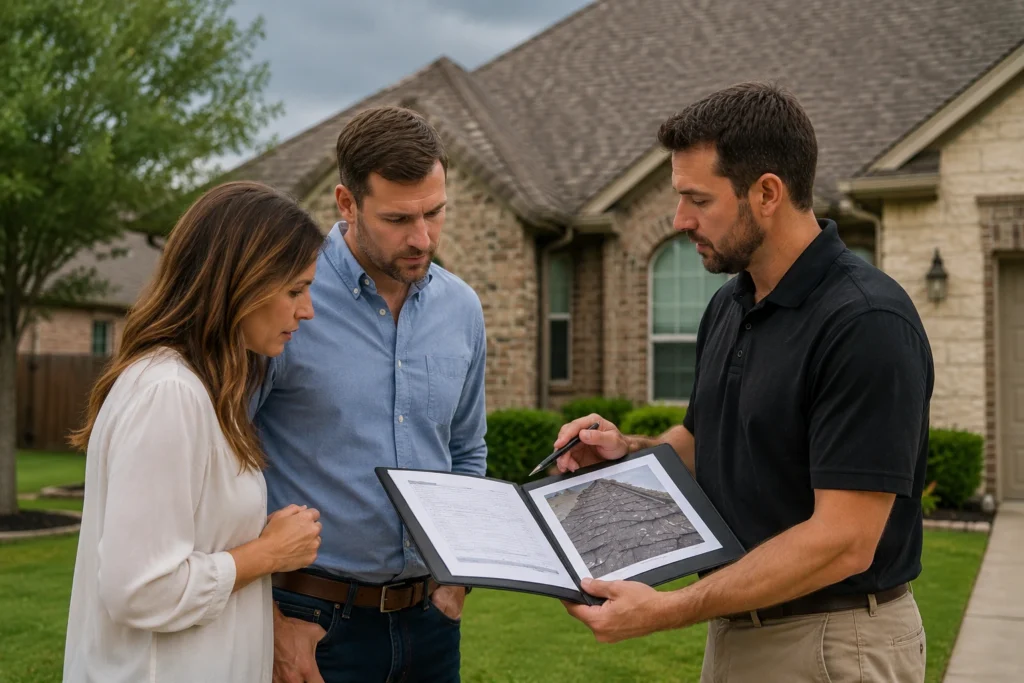
This surprises homeowners constantly. Two professionals can inspect the same roof and produce estimates separated by tens of thousands of dollars. Why? Because estimating is not only about measurements. It is about scope.
One estimate may include:
- Basic shingle replacement
- Minimal labor
- Limited accessories
Another may include:
- Starter shingles
- Ridge caps
- Drip edge
- Flashing replacement
- Steep roof charges
- Detach and reset items
- Ice and water barriers
- Ventilation upgrades
- Code-required components
- Waste factors
- Matching requirements
Those differences add up quickly. This is one reason discussions around Public Adjuster vs. Insurance Adjuster for Hail Claims in Texas are so important for property owners dealing with large roof claims.
The Role of Xactimate in Hail Claims
Xactimate is the standard estimating platform used across the insurance industry. It helps calculate labor, material pricing, and repair costs based on geographic location. Most insurance carriers rely heavily on it. Public adjusters frequently use it as well.
But here is the key point many homeowners never hear:
Xactimate is only as accurate as the person writing the estimate. If important line items are omitted, the estimate can still be incomplete even when created inside industry-standard software. For example, one adjuster may include proper flashing replacement. Another may not. One may include steep roof safety requirements. Another may leave them out.
The software itself is not the issue. Scope accuracy is. This is why experienced contractors and public adjusters often review estimates line by line rather than simply looking at the total dollar amount. A low estimate may appear acceptable at first glance until the homeowner realizes entire categories of repair work are missing.
Common Items Missed in Initial Roof Estimates
I have seen these overlooked repeatedly in Texas hail claims:
- Ridge cap replacement
- Drip edge
- Starter shingles
- Flashing
- Chimney components
- Pipe jack replacement
- Gutters and downspouts
- Window screens
- Fence staining
- HVAC fins
- Garage door dents
- Code upgrades
- Additional labor requirements
Sometimes those omissions are accidental. Sometimes they are disputed intentionally. Either way, the homeowner bears the financial risk if the scope remains incomplete. Homeowners should never assume the first estimate is final. Estimates evolve constantly throughout the supplement process, especially after roofing materials are removed and hidden damage becomes visible.
Why Supplements Matter So Much
Supplements are additional requests for payment after missing or newly discovered damage is identified. They are extremely common in hail claims. Roof systems are layered structures. Hidden issues frequently appear during tear-off or after deeper inspection.
A supplement may include:
- Rotten decking
- Additional flashing damage
- Ventilation deficiencies
- Code-required upgrades
- Material availability changes
- Labor increases
- Underlayment problems
Experienced public adjusters often manage supplements aggressively because they understand how overlooked scope items affect restoration quality. Without supplements, homeowners may end up paying large out-of-pocket costs simply to complete repairs correctly. In many Texas claims, the supplement process becomes more financially important than the original estimate itself.
Many homeowners begin researching topics like “Hail Damage Claim Supplements: What Carriers Miss in Their Scope” after discovering that their original estimate failed to include critical roofing components, code-required upgrades, or hidden structural issues uncovered during repairs. That realization often becomes the turning point where policyholders start examining their claim documentation much more carefully.
When Homeowners Usually Hire a Public Adjuster
Not every hail claim requires a public adjuster. Some claims move smoothly. But there are several situations where homeowners commonly seek outside representation.
After a Denial
Some claims are denied because damage is classified as wear and tear instead of hail damage. Others are denied due to insufficient documentation. A public adjuster may reopen the discussion with additional evidence, inspection reports, photographs, and independent analysis.
After an Underpaid Settlement
This is extremely common. A contractor estimate arrives significantly higher than the insurance payout, and the homeowner suddenly realizes the approved amount may not cover repairs.
During Complex Claims
Large homes. Commercial buildings. Multiple structures. Steep roofs. Tile systems. Metal roofing.
Complex claims usually involve more disputes.
When Communication Breaks Down
Repeated adjuster reassignment can create chaos. Homeowners may explain the same damage repeatedly while waiting weeks for responses. At that stage, many property owners want someone handling the process professionally on their behalf.
Advantages of Working With an Insurance Adjuster

To be fair, insurance adjusters do provide real benefits.
Faster Initial Processing
Insurance carriers have established systems and internal workflows that can move claims quickly. Simple hail claims sometimes resolve efficiently without major conflict.
Direct Access to Carrier Systems
Insurance adjusters can update files internally, issue payments, and coordinate claim activity immediately.
No Separate Representation Fee
Homeowners do not directly pay insurance adjusters because they work for the carrier.
Straightforward Claims Can Resolve Smoothly
Minor damage claims with clear documentation sometimes move through the process without major disputes. Not every homeowner needs outside representation. That is important to acknowledge.
Advantages of Hiring a Public Adjuster
Now let’s examine why many Texas homeowners choose independent representation.
Independent Advocacy
This is the biggest factor. A public adjuster works for the policyholder. Their responsibility is protecting the homeowner’s financial interests within the policy.
More Detailed Documentation
Detailed inspections create leverage. Photographs, measurements, moisture readings, code documentation, and complete roof mapping often strengthen claim positions significantly.
Better Understanding of Policy Language
Insurance policies are dense. Coverage interpretation matters.
Public adjusters often analyze:
- Replacement cost provisions
- Actual cash value calculations
- Ordinance and law coverage
- Deductible structures
- Exclusions
- Depreciation handling
That analysis can affect settlement outcomes dramatically.
Stronger Negotiation Position
Public adjusters negotiate claims daily. They understand how carriers structure estimates, how supplements are reviewed, and where disputes commonly arise. That experience can help homeowners avoid accepting incomplete settlements too early in the process.
Supplement Experience
Supplements are not simple paperwork exercises. They require supporting evidence, accurate scope development, and negotiation skills.
Reduced Stress
Honestly, this matters more than many people realize. Managing a hail claim can feel like a second job. Between contractors, inspections, phone calls, emails, estimates, and deadlines, homeowners often become overwhelmed.
A public adjuster can centralize communication and reduce that burden. In Rosenberg, where storms can create waves of roofing claims across neighborhoods, many homeowners simply want someone experienced guiding the process from start to finish.
Potential Drawbacks Homeowners Should Consider
There are tradeoffs. Public adjusters charge fees, typically structured as a percentage of the claim recovery. That means homeowners should evaluate whether representation makes financial sense based on claim size and complexity. Also, not every public adjuster delivers the same level of expertise. Experience matters enormously.
Before hiring anyone, homeowners should verify:
- Texas licensing
- Storm claim experience
- Reputation
- Communication style
- Documentation quality
- Knowledge of roofing systems
- Understanding of supplements
Bad representation can create delays and frustration too. Homeowners should also avoid making decisions based entirely on aggressive marketing. After large Texas storms, neighborhoods often become flooded with solicitors promising huge settlements. Professionalism, transparency, and technical knowledge matter far more than flashy promises.
During complicated claim negotiations, homeowners sometimes feel trapped in layers of technical documentation and decision-making that resemble a form of epistemology, where determining what information is truly reliable becomes part of the challenge itself.
Questions Homeowners Should Ask Before Hiring Any Adjuster
Strong questions create better outcomes.
Questions for Insurance Adjusters
- How long will the inspection take?
- Will roofing specialists be involved?
- Are code upgrades included?
- How are material prices calculated?
- What documentation supports the estimate?
Questions for Public Adjusters
- Are you licensed in Texas?
- How often do you handle hail claims?
- Do you write Xactimate estimates?
- How do supplements work?
- What percentage fee do you charge?
- How will communication be handled?
Red Flags
Be cautious if someone:
- Promises unrealistic payouts
- Pressures immediate signatures
- Avoids detailed documentation
- Refuses written explanations
- Makes vague coverage claims
Professionalism matters.
Texas Claim Timelines Matter
Texas insurance laws impose deadlines on carriers for claim handling and communication. That does not guarantee smooth claims. But timing still matters.
Homeowners should:
- Report damage quickly
- Document conditions immediately
- Prevent additional damage
- Save repair receipts
- Maintain organized communication records
Waiting too long can complicate inspections and weaken evidence. Delays may also create disputes over whether damage came from the reported storm event or from later deterioration. Fast documentation protects homeowners from those arguments.
How to Strengthen a Hail Claim Yourself
Even if you never hire a public adjuster, there are steps that dramatically improve claim quality.
Take Extensive Photos
Capture:
- Roof slopes
- Gutters
- Siding
- Fence damage
- HVAC units
- Windows
- Interior leaks
Use both close-up and wide-angle images.
Keep Storm Documentation
Save hail reports, weather alerts, and storm dates.
Request Detailed Estimates
Avoid vague one-page summaries. Detailed line-item estimates provide transparency and make disputes easier to evaluate.
Save All Communication
Emails. Inspection notes. Claim letters. Text messages.
Organization matters.
Do Not Rush Repairs Without Documentation
Emergency mitigation is important, but homeowners should document damage thoroughly before permanent repairs begin whenever possible. Once materials are removed, proving original storm damage becomes harder.
Real-World Scenario: When Estimates Collide
Imagine this situation. A homeowner receives a $14,000 insurance estimate after a hailstorm. The roofing contractor estimates $31,000. The homeowner is confused.
Who is correct?
The difference often comes down to scope. The carrier estimate may exclude flashing, ventilation changes, steep roof charges, or code-required upgrades.
After supplements and negotiation, the approved amount rises substantially. This scenario happens constantly in Texas hail claims. In some cases, homeowners discover the approved amount would not even satisfy local building requirements once contractors begin repairs. That creates additional financial pressure midway through the project.
When an Insurance Adjuster Alone May Be Enough
There are absolutely situations where homeowners may not need outside representation.
For example:
- Minor cosmetic damage
- Small repair scopes
- Clear carrier communication
- Fair initial settlements
- Limited dispute areas
If the claim is straightforward and the estimate fully covers repairs, additional representation may not provide significant value. Some homeowners successfully navigate the process independently by staying organized, reviewing estimates carefully, and working with experienced contractors who understand supplements and documentation requirements.
When a Public Adjuster May Be Worth Considering
Representation often becomes more valuable when:
- The claim was denied
- Settlement amounts feel low
- Multiple inspections disagree
- The roof system is complex
- Commercial property is involved
- Communication has stalled
- Hidden damage is discovered
- Large supplements are necessary
The more complicated the claim becomes, the more valuable expertise often becomes too. That is why conversations around Public Adjuster vs. Insurance Adjuster for Hail Claims in Texas continue growing across storm-prone areas like Rosenberg and surrounding communities.
The Emotional Side of Hail Claims
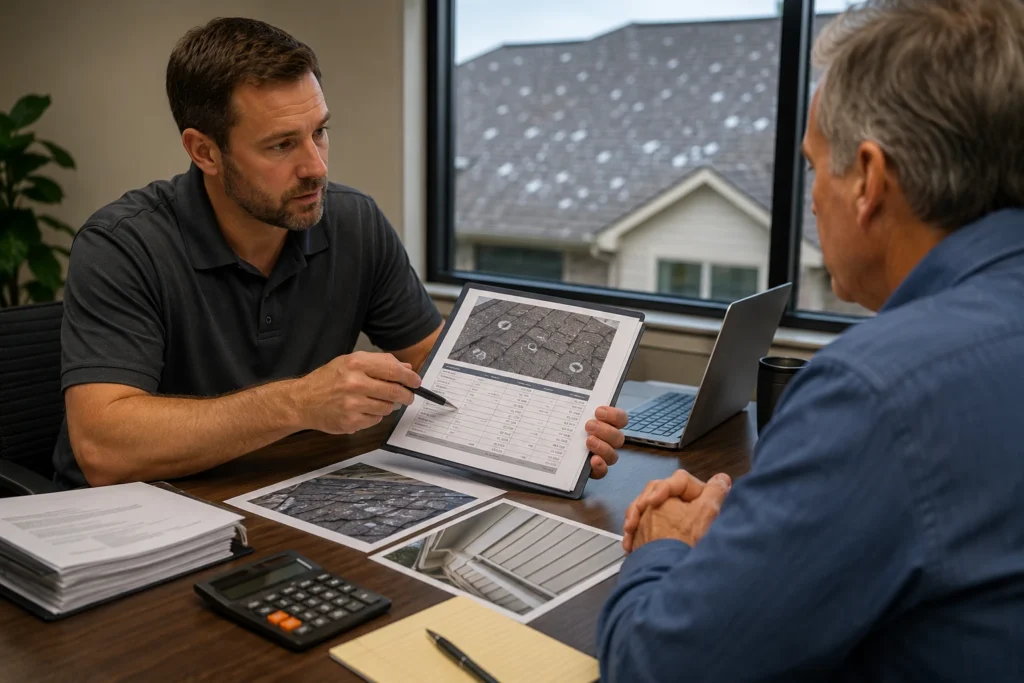
People rarely talk about this part. Hail claims are stressful because homes are emotional investments, not just structures.
Families worry about:
- Financial exposure
- Delays
- Contractor availability
- Interior leaks
- Future resale value
- Insurance renewals
- Mortgage obligations
And all of that stress unfolds while homeowners try to interpret technical estimates and policy language. That emotional pressure often pushes people into rushed decisions.
Slow down.
Review documentation carefully. Ask questions. Compare scopes. Understand who represents whom. That alone can prevent major mistakes.
Final Thoughts
The debate around Public Adjuster vs. Insurance Adjuster for Hail Claims in Texas is not about declaring one side universally right or wrong. It is about understanding roles. Insurance adjusters represent carriers. Public adjusters represent policyholders. That distinction affects inspections, negotiations, scope development, supplements, and settlement strategy. Some hail claims move smoothly with minimal conflict. Others become complicated fast.
The smartest homeowners approach claims strategically. They document thoroughly. They review estimates carefully. They ask hard questions. And they avoid assuming the first inspection automatically captures the full extent of the damage. In places like Rosenberg, where severe storms can leave entire neighborhoods navigating roofing claims simultaneously, preparation and knowledge make a huge difference. A well-managed hail claim is not just about getting paid.
It is about restoring the property correctly, protecting long-term value, and avoiding financial surprises after repairs begin. That matters more than most people realize. And for homeowners evaluating Public Adjuster vs. Insurance Adjuster for Hail Claims in Texas, understanding those differences early can dramatically improve both the claim experience and the final outcome.
FAQs
An insurance adjuster works for the insurance company, while a public adjuster represents the homeowner during the claim process.
No. Smaller and straightforward claims may resolve smoothly without outside representation.
Yes. Public adjusters often reopen claims using additional inspections, documentation, and supporting evidence.
Yes. Public adjusters must hold an active Texas license to legally represent policyholders.
Supplements are additional claim requests for damage or repair costs that were missed in the original estimate.
Different adjusters may include different repair scopes, labor charges, code upgrades, and roofing components.
No. Outcomes depend on the policy, documentation, damage severity, and negotiation process.
Most public adjusters charge a percentage of the final claim settlement amount.
Take photos of roof damage, gutters, siding, windows, HVAC units, and any interior leaks immediately after the storm.
Homeowners often contact one after a denial, underpayment, delayed claim, or complicated hail damage dispute.